
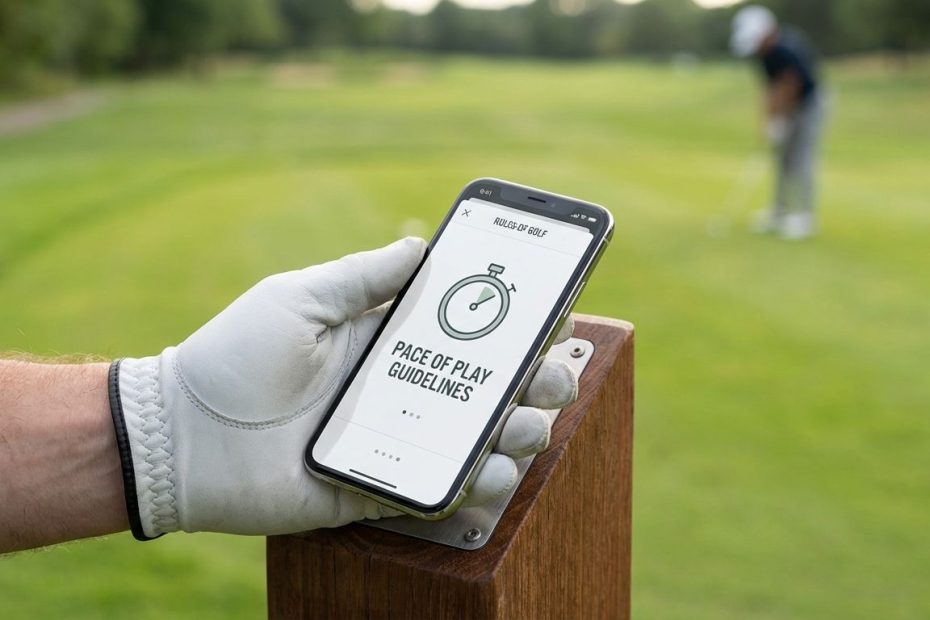
Modern golf rules are not “soft,” and they are not designed to punish tradition. They are designed to keep the game playable at scale, protect fairness when equipment performance outpaces course design, and reduce avoidable friction that ruins rounds for everyone else.
You can keep the game’s values without clinging to outdated assumptions about how rules, equipment standards, and competition policies work. This guide clears up the biggest flashpoints, golf ball rollback, pace-of-play enforcement, and the “new rules” many golfers misquote, so you walk onto the first tee ready to play faster, cleaner, and with fewer arguments.
What Exactly Is The Golf Ball “Rollback,” And Will It Really Affect Regular Golfers?
The rollback is not a rule that forces you to hit it shorter on command, and it is not a mandate to redesign your home course. It is a change to the conformance testing conditions used to decide whether a golf ball is legal under the Overall Distance Standard, the long-standing test that caps how far a ball is allowed to go under controlled conditions.
Traditionalists often treat rollback talk like an attack on distance itself, as if distance is suddenly “bad.” Distance is still a skill, and speed still matters. The issue is that equipment gains have accumulated for decades, and the ball is the one piece of gear that influences every club in the bag, every player category, every course footprint, and every level of the game.
What should regular golfers actually expect? Expect less change than the loudest debates suggest, and expect the biggest impact to land on the highest-speed players. If a golfer delivers tour-level speed, the testing update is aimed directly at that end of the performance curve. If a golfer swings at typical recreational speeds, the real-world difference trends smaller, and the bigger day-to-day distance drivers remain centered strikes, launch conditions, and course conditions.
Another misunderstanding shows up every time this topic hits group chats: “rollback” does not mean the rules are forcing a one-ball for elite players while letting everyone else do something different by default. The plan is still a single conformance standard with an implementation runway, so manufacturers and retailers can transition inventory and golfers can adjust without chaos.
There is also a practical point that gets missed in distance arguments: most golfers do not lose shots because the ball is too long. They lose shots because of penalties, missed greens, short-game inefficiency, and slow decision cycles that wreck rhythm. A few yards do not matter if the round turns into stop-and-start golf that drags toward five hours.
Why Are The USGA And R&A Changing The Ball Instead Of Banning Drivers Or “Tech”?
Changing the ball testing conditions is the most efficient lever the governing bodies have because it influences the entire game with one rulebook decision. Chasing every driver head, shaft profile, face technology update, and fitting trend is a whack-a-mole strategy. It also creates a perception problem: players start believing the rules target specific brands or design concepts, which is the fastest way to turn equipment governance into a constant political fight.
The ball is also the cleanest place to manage the distance ceiling because it affects more than tee shots. When the ball flies farther, long approach shots become short irons, short irons become wedges, and course architecture loses intended decision points. That is where “tradition” actually lives, in the choices you are forced to make, not in nostalgia about how far a 7-iron used to go.
Traditionalists often say modern leaders should “protect the classic courses” by limiting the athlete, not the ball. That sounds decisive, yet it ignores what modern tournament venues face: longer rough lines, new tees, extended back-of-house infrastructure, increased maintenance demands, more water, more staffing pressure. Those are business realities, not philosophical arguments.
Golf also carries a public-course reality that private-club voices sometimes overlook. Municipal and daily-fee operators already handle pace, maintenance budgets, and tee sheet economics. When courses stretch longer to keep up with distance growth, they add costs and often add time. A ball governance decision is partly about protecting the viability of the places where most golfers actually play.
Are Pro Tours Actually Getting Serious About Slow Play, Or Is It Just Talk?
It is more than talk when the tours start publishing speed-of-play information and testing enforcement mechanisms that change behavior. Public accountability works in a modern media environment because it reframes slow play from “personality quirk” into measurable performance that affects competition integrity.
Speed-of-play initiatives also matter because slow play is contagious. One player who drifts into slow routines forces groups behind to wait, and the waiting groups start over-reading putts, over-checking numbers, then their own pace slides. By the time a round is behind, it rarely recovers without decisive intervention.
Traditionalists sometimes argue that slow play is just “players being thorough,” and that pressure to speed up damages shot quality. Tournament golf has always involved pressure, and elite players still execute when they commit to efficient processes. Clean routines are not slow routines. A stable pre-shot pattern can run fast if the decisions happen while walking, clubs are selected with purpose, and the player arrives at the ball ready to hit.
From a governance standpoint, speed-of-play programs are also a signal that the tours understand the product. Fans, broadcasters, and sponsors do not want dead time. Competitive players do not want their momentum chopped up. Most important, everyday golfers copy what they see, and long televised routines normalize long public-course routines.
What “New Rules” Are Golfers Most Likely To Get Wrong In 2026 Even If The Rulebook Didn’t Change?
The biggest misunderstandings usually come from golfers confusing three different things: the Rules of Golf, Model Local Rules, and “the way the group has always handled it.” Traditionalists sometimes treat casual norms as sacred tradition, then call it “modern softness” when someone points out the actual rule.
Clarifications exist because edge cases repeat. Golf produces the same disputes again and again: embedded balls near closely-mown areas, relief from unusual conditions, where a ball last crossed a penalty area, what “known or virtually certain” really means. Clarification documents aim to reduce the number of decisions that turn into arguments on the course or inconsistencies across committees.
One recurring friction point is the temptation to invent relief in the name of pace. “Gallery drops,” free relief because a ball “should be found,” or an agreed-upon drop because the group “doesn’t want to hold anyone up” might feel practical. Under the Rules, those choices can convert a score into something else entirely, which is fine in a casual match when everyone agrees, but it becomes a problem when golfers claim they are still playing by the book.
The modern game pushes you to get crisp about which format you are playing. If the round is a strict score for handicap purposes, the Rules matter. If the round is purely recreational, pick a standard and be explicit about it. The conflict comes when golfers quietly blend strict rules, loose local custom, and personal convenience, then get angry when someone else enforces one standard consistently.
How Long Do You Really Have To Look For A Lost Ball, And Why Does This Rule Still Cause Fights?
You have three minutes to search, and the tension comes from when golfers start counting late, or stop counting when the search gets inconvenient. The modern time limit exists to protect the course behind you. A five-minute search does not stay five minutes in practice, because five minutes becomes eight, then another player insists on “one more look,” then someone else hits when the group is still in the landing area.
Traditionalists sometimes remember the older timing and treat the newer standard as a dilution of accountability. It is a pace-of-play correction that forces better behavior: hit a provisional when appropriate, track the ball in the air, communicate clearly, and stop wandering around as if extra minutes create extra rights.
Lost-ball disputes also show up because many golfers still operate with unspoken social rules. A group may allow a “reasonable drop” if everyone saw the ball enter an area that should hold it. That can keep the round moving, yet it is not the Rules unless a committee has authorized a Local Rule that changes the stroke-and-distance burden in specific ways for specific settings. Confusion happens when golfers want the efficiency of a casual workaround with the legitimacy of strict scoring.
If the goal is fewer arguments and faster golf, the answer is operational. Decide before the round how strict the group will be, carry a rules app or a pocket reference, and treat the provisional ball as a professional tool, not an admission of failure. That one habit saves more time than any debate about whether modern golf has become too forgiving.
Did The Rules Of Golf Get “More Relaxed,” Or Are People Misreading What Changed In Recent Updates?
Some updates simplified procedures and reduced penalties that did not protect competitive fairness, and that is not the same thing as making golf easier. The Rules still punish poor execution. Penalty areas still cost strokes. Out of bounds still costs strokes. The tee shot still matters, the approach still matters, the short game still decides most scores.
What changed is that the rules moved closer to how golf is actually administered on real courses with real time constraints. Digital scoring exists, committees can validate cards, and many older penalty traps were built for paper-era processes. When a rule’s main function is to create an avoidable technical penalty with no gain in fairness, it becomes a candidate for modernization.
Traditionalists often call these adjustments “soft” because they remember a version of golf where small paperwork mistakes or procedural missteps could wreck a round. That version of the game did not always produce better golfers, it produced golfers who were more afraid of rules errors than committed to execution. The modern rule trend pushes accountability toward the shot, the drop, the measured outcome, and away from gotcha penalties that do not improve competition integrity.
There is also a fairness angle that serious players recognize quickly. When the rules reduce unnecessary penalties, they reduce the advantage held by golfers who have grown up with tournament reps, weekly rules officials, and deeply experienced playing partners. Cleaner rules can improve access to competitive golf because fewer golfers get priced out by confusion and discouragement.
What Do Everyday Golfers Get Most Upset About In “Modern Rules” Debates?
The loudest frustration usually sits in three buckets: pace-of-play ethics, casual relief culture, and equipment governance decisions that feel like they target the wrong people. Most golfers are not arguing about the text of a rule. They are arguing about the social contract of the round, who the rules protect, and who pays the cost of enforcement.
Traditionalists often frame the debate as “respect for the game.” Many modern players also respect the game, yet they demand that respect show up as readiness to play, fast decisions, and honest scoring standards. When a golfer takes extra time, claims free relief without justification, then lectures others about tradition, that is where the conflict turns personal.
Rollback arguments fit the same pattern. Many golfers accept the logic of protecting course sustainability and design intent, yet they dislike being told they might lose distance when their own distance was never the root cause of venue expansion. That is a valid emotional reaction. A practical response is to focus on what stays in your control: center contact, launch optimization, wedge distance control, and penalty avoidance.
Modern golf also sits inside modern life. Tee sheets are tight, public-course rounds must fit into fixed windows, and many golfers play fewer holes or fewer rounds. That makes pace and predictability more important. The rule debates that matter most are the ones that protect time, reduce conflict, and keep a round from turning into a slow march of contested drops.
What Traditionalists Get Wrong About Modern Golf Rules
- Rollback changes ball testing, not your swing
- Three-minute lost-ball search protects pace
- Clarifications reduce disputes, not difficulty
- Slow-play enforcement targets repeat offenders
Play The Modern Game Without Losing The Game’s Values
If traditional golf matters, treat rules literacy, pace discipline, and equipment reality as part of being a serious golfer. Rollback is a conformance test change designed to control distance creep, not a campaign against athleticism. Speed-of-play initiatives signal that tours and governing bodies understand the viewing product and the on-course experience, and they are willing to measure and pressure behaviors that waste time. Clarifications and modernized rules reduce avoidable penalties, tighten consistency, and lower the odds that a round gets decided by confusion rather than execution. Walk away with one standard for how scores are posted, one fast routine that holds up under pressure, and one commitment to playing the ball as it lies unless the Rules allow relief.
References
- USGA: Revised Golf Ball Testing Conditions To Take Effect In 2028
- USGA: The Golf Ball And Distance FAQ
- ESPN: Revised Golf Ball Testing Goes Into Effect In 2028
- Sky Sports: Golf Ball Rollback Explained
- CBS Sports: Stakeholder Opposition To Rollback Decision
- GolfPass: What Rollback Means For Golfers
- PGA TOUR: Publishing Speed-Of-Play Statistics
- PGA TOUR: Pace-Of-Play Update And Testing
- ESPN: LPGA Pace-Of-Play Changes
- USGA: Additional Clarifications Of The 2023 Rules Of Golf (PDF)
- USGA: Rules Of Golf (2019 Rulebook PDF)
- USGA: Explanation For Each Major Change In The 2019 Rules

Barry Bekkedam is an entrepreneur and finance executive focused on investment management and advisory. A former Villanova standout and member of Canada’s men’s national basketball team, he now leads ventures in asset management and philanthropy, including the Barry Bekkedam Foundation supporting education and community development.