
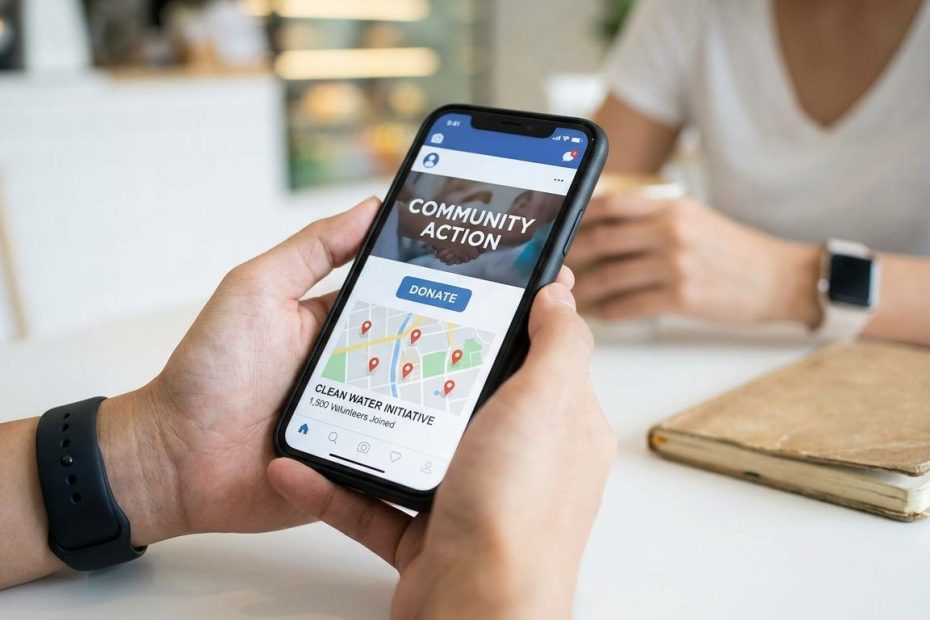
Social media for social good means using the platforms your community already checks every day to move people from awareness into action. When you use the right mix of messaging, platform tools, trust signals, and follow-up, you can turn scattered attention into volunteers, donations, turnout, mutual aid, and lasting local support.
You do not need a huge budget or a national brand to make that happen. You need a clear cause, a practical action path, and a communication system that helps people know what to do, when to do it, and why their effort matters. This guide shows you how to organize that system, choose the right channels, keep your campaign credible, and build momentum your community can actually sustain.
What Is Social Media For Social Good, And Why Does It Work So Well For Community Mobilization?
Social media for social good is the deliberate use of digital platforms to advance a public benefit. That benefit may be local fundraising, volunteer recruitment, neighborhood support, event turnout, advocacy, emergency coordination, school improvement, or issue awareness tied to a clear action. The phrase matters because it shifts your focus away from posting for visibility and toward posting for measurable outcomes.
You see the strongest results when you treat social media as a movement engine rather than a content outlet. People rarely wake up looking for a new cause to support, yet they do respond when a trusted post makes the action simple, local, timely, and useful. Research on civic engagement has shown that social platforms can activate weak social ties into participation, which is exactly what community organizing needs: more people taking one concrete step without requiring a deep preexisting relationship.
Your job is to remove friction. If your audience has to guess what the mission is, who is leading it, where the money goes, or what step comes next, you lose them. If your post makes the need visible, the ask specific, and the path easy, you increase the odds that casual followers become active supporters.
This is why social media has become so central to local action. People already use these platforms to find neighborhood updates, school news, weather alerts, business recommendations, and community discussion. When your cause is presented with the same clarity and local relevance, it enters the same daily attention stream where real decisions are being made.
How Do You Move People From Likes And Shares To Real-World Action?
You convert attention into action when every piece of content answers three questions fast: what needs to happen, what you want the viewer to do, and how long it will take. Most community campaigns fail at the handoff point. They generate sympathy, comments, and reposts, but they do not translate that energy into sign-ups, donations, attendance, or delivery because the next step is vague or buried.
Your calls to action must stay singular. If one post asks people to donate, volunteer, join a messaging group, sign a petition, and attend a meeting, you create choice overload. One post should drive one action. That action should feel specific and immediate, with a visible outcome tied to it.
You also need to organize your asks by effort level. Low-lift actions include joining a group, sharing a post, commenting to confirm interest, or voting in a poll. Mid-lift actions include registering for an event, giving a small donation, contributing supplies, or inviting neighbors. High-lift actions include committing to a shift, leading a team, managing outreach, or serving as a local organizer. When you build this ladder intentionally, you give supporters a path to deepen their involvement instead of forcing everyone into the same commitment level.
Follow-up is where the real conversion happens. A person who liked one post is still only adjacent to your cause. A person who receives a direct reminder, sees a progress update, and gets thanked publicly is more likely to return. Momentum grows when supporters see visible proof that actions are producing outcomes, not disappearing into a feed.
Which Platforms Work Best For Rallying A Local Community?
No platform does every job well. You get stronger results when you assign each platform a role based on how people actually use it. Discovery, trust-building, coordination, and retention are different jobs, and your channel mix should reflect that.
Facebook remains useful for local coordination because groups, events, comments, and community discussion are already part of the platform’s behavior. It works well when you need ongoing updates, shared logistics, and visible local participation. If your audience includes parents, neighborhood residents, volunteers, and civic groups, Facebook often serves as a strong operating base.
Instagram is effective when you need visual storytelling paired with fast updates. Stories, direct messages, and broadcast channels can help you keep supporters warm between larger actions. You can use it to humanize your mission, spotlight volunteers, share milestones, and deliver reminder content that feels personal rather than formal.
TikTok works best for reach and awareness. If your cause benefits from short, clear videos that show urgency, emotion, local relevance, or visible impact, TikTok can extend your message beyond your existing followers. It is especially useful at the top of the funnel, where you need new people to discover your effort and take a lightweight first step.
WhatsApp is valuable when you need tighter coordination. A community built inside WhatsApp can centralize announcements and related groups, which helps when your campaign relies on direct communication, neighborhood updates, volunteer logistics, or rapid response. This is where interest can turn into organized action with less noise.
Reddit can help when your local or issue-based audience is already active there. It is not always the main command center, yet it can be useful for surfacing causes, gathering feedback, validating concerns, or reaching niche communities. The strongest use case is often early awareness or targeted discussion rather than day-to-day operations.
You should stop asking which platform is best in the abstract. Ask which platform is best for discovery, which is best for logistics, which is best for credibility, and which is best for retention. That shift alone will improve your results.
What Do Current User Trends Tell You About Where Community Attention Lives?
If you want people to act, you need to meet them in the channels where they already consume updates and make local decisions. Current research from Pew Research Center shows that a significant share of United States adults regularly get news on social media platforms, with Facebook and YouTube remaining major sources. That matters for your campaign because it confirms that community information now competes in a social feed, not just on websites, flyers, or email newsletters.
Pew also found that online forums, including Facebook groups, have become a major source of local news and information. The growth in people getting local news from these spaces tells you something important: your audience does not separate community life from platform use as neatly as many organizations assume. Local news, neighborhood conversation, safety updates, school information, and community needs now often appear side by side.
This changes how you should write and publish. You are not posting into a vacuum. You are posting into a stream crowded with urgent updates, local rumors, event invites, weather alerts, and everyday distractions. To earn attention, your content must be specific, recognizable, and trustworthy at a glance.
You also need to think like a local publisher. Your headline, first sentence, image choice, and action language all influence whether someone stops scrolling long enough to participate. If your post feels generic, institutional, or disconnected from local life, it will be ignored no matter how worthy the cause may be.
How Should You Structure A Social Good Campaign So It Actually Builds Momentum?
You need a simple operating model: attention, trust, participation, coordination, retention. Most successful community campaigns move people through these stages, whether they planned it that way or not. When you map your content and tools to each stage, your outreach becomes sharper and easier to manage.
Attention is where you introduce the problem and establish urgency. This is where short-form video, simple graphics, local testimonials, and direct headlines carry weight. Your goal is not to explain everything. Your goal is to earn a pause and make the issue feel immediate and relevant.
Trust comes from proof. You build it with visible leadership, local names, partner mentions, transparent donation paths, direct contact details, and consistent updates. You also build it by sounding like someone who knows what needs to happen and respects the audience’s time. If trust is weak, participation stays shallow.
Participation starts when the supporter takes the first action. This may be a donation, a sign-up, a response to a poll, a shared post, or a group join. At this stage, you must reduce friction hard. Limit clicks, shorten forms, make mobile completion easy, and avoid jargon.
Coordination begins when supporters need logistics. This is where messaging groups, event pages, pinned instructions, volunteer schedules, and reminder content matter. Once people move from awareness to commitment, vague posting stops working. They need clean operations.
Retention is what turns a one-off campaign into a durable community asset. People stay involved when they see impact, feel recognized, and understand what comes next. A campaign that ends every action with silence teaches supporters that their effort disappears. A campaign that reports back, thanks contributors, and presents the next opportunity keeps the community active.
What Tools Should You Use To Mobilize Supporters More Efficiently?
Platform-native tools matter because they remove extra steps. Every time you force someone to leave an app, load a page, create an account, or search for missing details, you lose part of your audience. The most effective organizers use built-in features for the first conversion and move people into a more structured system only when needed.
Instagram Broadcast Channels can help you reach a committed audience directly with updates, polls, and quick announcements. This works well when your community already follows your account and you need a one-to-many message stream that does not rely entirely on feed visibility. It is useful for reminders, milestone updates, event prompts, and short calls to action.
TikTok donation tools can reduce friction for fundraising when your organization qualifies. Donation stickers and profile donation links help connect compelling video content to immediate giving behavior. This works best when your content shows a direct need, a visible outcome, and a reason to act now rather than later.
WhatsApp Communities are strong when your campaign includes multiple groups, teams, or neighborhoods that need a shared umbrella. You can use announcements to maintain clarity while allowing smaller group coordination underneath. That structure is practical for volunteer management, supply distribution, school communities, and local response efforts.
You also need a fallback plan. Platform features do not roll out evenly, and access limitations can disrupt your workflow. A dependable backup stack includes email, a mobile-friendly sign-up form, and a simple landing page or link hub that explains the mission and next action. If a platform feature disappears, breaks, or stays unavailable, your campaign should still function.
Good tools do not save weak messaging. They amplify strong messaging. Pick the tool that shortens the path between interest and action, then support it with crisp instructions and consistent follow-up.
How Do You Build Trust, Safety, And Credibility In A Public Community Campaign?
Trust is not a branding exercise. It is an operating requirement. If you are asking people to donate funds, share private needs, volunteer time, or arrive at a physical location, they need to know who is behind the campaign and how decisions are being made. The clearer you are, the easier it becomes for supporters to say yes without hesitation.
Start with identity. Your campaign should make it easy to verify the organizer, the mission, and the intended use of resources. Use real names where appropriate, consistent organization branding, visible contact channels, and a simple explanation of what you are collecting and why. Ambiguity creates drop-off, and it also attracts suspicion.
Separate announcements from discussion when possible. This reduces confusion, rumor spread, and duplicated questions. A single announcement channel for confirmed updates paired with a moderated discussion space often works better than one noisy thread where urgent information gets buried.
Moderation matters more than many organizers expect. Public community work attracts confusion, emotional debate, scams, and off-topic conflict. You need rules for harassment, privacy violations, rumor posting, and solicitation behavior. You also need people assigned to enforce those rules quickly and consistently.
Impact reporting is another trust engine. Supporters want receipts, not just emotion. Show what was raised, what was delivered, how many people attended, what changed, and what remains to be done. When people see proof, they stop wondering whether the campaign is real and start deciding how much more they can contribute.
Privacy boundaries deserve equal attention. Do not collect more personal information than you need. Do not encourage public oversharing when private channels are safer. Community support works best when people feel helped, not exposed.
What Can You Learn From Mutual Aid And Community Response Efforts Online?
Mutual aid groups and community response networks show what social media looks like when it functions as infrastructure rather than promotion. Research on Facebook mutual aid groups documented how these spaces enabled people to request and offer support at scale. That matters to you because it proves that social platforms can do more than raise awareness. They can coordinate practical help when the structure is clear enough.
Studies of digital emergent response groups tied to disasters also show that people use online communities to share information, identify needs, offer aid, and coordinate activity through different phases of an event. You can apply the same mechanics to non-emergency community work. The tools may stay the same, yet the discipline comes from how you organize requests, verify information, and route action.
Pinned posts, standard request forms, volunteer verification, location details, urgency labels, and update schedules make a huge difference. When community members can immediately see what is needed, what has been claimed, what is pending, and where to report outcomes, chaos drops. The more orderly your system is, the more people trust it and contribute to it.
You should also notice the limit of spontaneous goodwill. Energy surges fast around visible needs, then fades if no one manages follow-through. Social good campaigns work when someone is accountable for intake, response, moderation, reporting, and supporter communication. Community care still needs operations.
How Do You Create Content That Inspires Action Without Sounding Performative?
Your content should sound useful, grounded, and specific. Community audiences respond to clarity more than grand messaging. They want to know what happened, what is needed now, who is affected, and what action makes a real difference. When you give them that information directly, your content feels credible rather than performative.
Use plain language and visible stakes. State the need in concrete terms. State the action in a single sentence. State the outcome that action supports. This is stronger than abstract cause language because it respects the audience’s need to make a quick decision.
Show people, not just slogans. Volunteer photos, supply tables, event footage, neighborhood updates, handwritten thank-you notes, before-and-after comparisons, and short testimonials all signal movement. Audiences trust proof they can see. They also remember faces, places, and numbers more than broad mission statements.
Keep your posting rhythm intentional. Educational posts build understanding. Urgent posts drive immediate action. Progress posts validate participation. Appreciation posts improve retention. Recruitment posts widen the circle. When you vary format but stay consistent in purpose, your feed becomes easier for supporters to interpret and act on.
You should also tighten your creative discipline. The first line must carry meaning on its own. The visual must support the message without needing a long explanation. The caption must tell the audience exactly what step to take. Strong content is not louder. It is easier to act on.
How Do You Measure Whether Your Community Campaign Is Actually Working?
You should not judge a social good campaign by reach alone. Reach can tell you whether people saw your message, yet it cannot tell you whether your community moved. If your objective is turnout, donations, volunteer recruitment, or local participation, your core metrics need to reflect that objective directly.
Start with conversion metrics. Track sign-ups, confirmed attendees, donations, volunteer applications, supply contributions, group joins, direct replies, and repeat participation. These numbers show whether your content is generating action rather than surface interaction.
Then measure efficiency. Look at cost per sign-up if you are using paid promotion, response time for volunteer inquiries, attendance rate after registration, donation completion rate, and drop-off points in your forms or links. These indicators reveal friction in your system that audience enthusiasm alone will not overcome.
Retention metrics matter more than most teams realize. Track returning volunteers, repeat donors, recurring participants, and engagement from people who joined in earlier campaigns. A growing community is not just one that reacts. It is one that comes back.
You should also review message performance by action type. Which format produced the most donations, the most sign-ups, the best attendance, the most shares by local leaders, or the highest direct-message response rate? That gives you a stronger planning base than vanity metrics ever will.
Good measurement keeps your campaign honest. It tells you whether you are building public momentum or just producing content that feels active.
What Does A Practical Platform Playbook Look Like For Your Community?
You need a platform playbook that assigns clear jobs. Use TikTok and Instagram Reels for top-of-funnel awareness with short videos tied to one action. Use Instagram Stories for reminders, countdowns, polls, and donation prompts. Use Facebook Groups or Events for ongoing discussion, attendee coordination, and visible local engagement.
Use WhatsApp for your active inner circle once people commit. That includes volunteers, neighborhood leads, school organizers, or project teams who need direct updates and quick responses. Use email for formal reminders, logistics, and records. Email still matters because it gives you a channel you control outside shifting platform features.
Your content flow should support the supporter journey. Awareness content introduces the issue. Action content asks for one step. Logistics content confirms details. Proof content shows outcomes. Recognition content strengthens the bond. Renewal content presents the next opportunity before attention fades.
When you run this playbook well, your community stops experiencing your cause as a random series of posts. They experience it as a clear, reliable civic presence they can trust and join.
What Is The Best Way To Use Social Media For Social Good?
- Pick one clear cause and one clear action.
- Use social platforms for discovery, trust, and rapid updates.
- Move supporters into groups, email, or messaging for coordination.
- Show proof, report outcomes, and ask for the next step.
Turn Online Attention Into Local Impact
If you want social media to rally your community, stop treating it like a megaphone and start treating it like an action system. Your strongest results come from matching the right platform to the right job, asking for one specific action at a time, and making trust visible in every post and follow-up. People will support real work when the mission is clear, the path is simple, and the proof is public. Build that structure well, and your campaign will do more than trend for a day. It will help your community organize, respond, contribute, and stay engaged long after the first post goes live.

Barry Bekkedam is an entrepreneur and finance executive focused on investment management and advisory. A former Villanova standout and member of Canada’s men’s national basketball team, he now leads ventures in asset management and philanthropy, including the Barry Bekkedam Foundation supporting education and community development.