
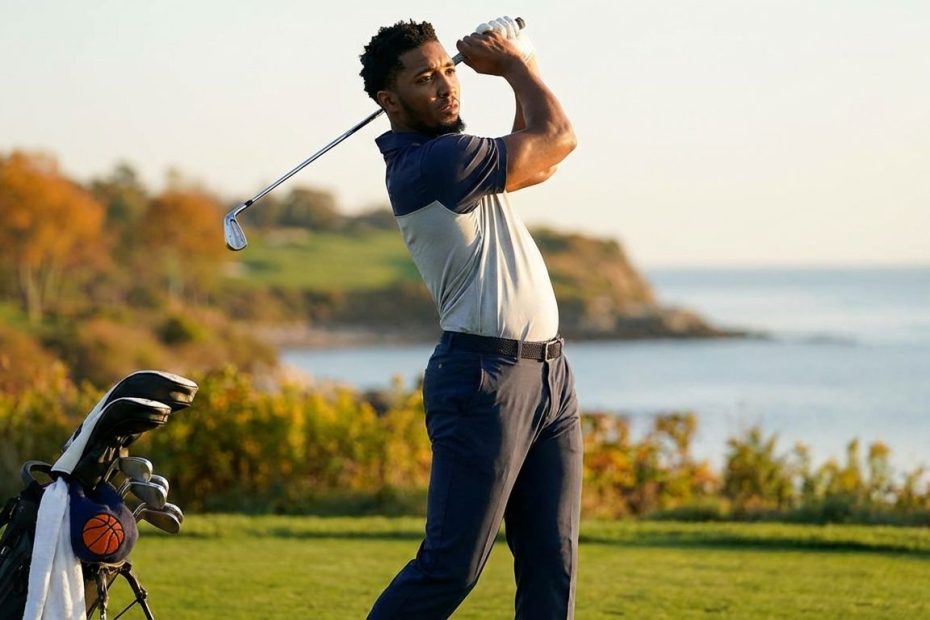
Elite competitors move to golf in the off-season because it keeps your competitive engine warm without the collision, constant jumping, and reactive chaos that wear down court athletes. You get skill pressure, decision-making, and controlled volume, with far fewer “one bad step” moments.
This guide breaks down why golf keeps showing up in pro off-seasons, what it does and does not do for performance, how to play it without creating new problems, and how to use it for networking, brand value, and mental reset without letting it hijack training. You’ll walk away with a practical way to plug golf into an off-season plan, protect your body, and keep your edge sharp when the season restarts.
Why Do Elite Court Athletes Choose Golf Over More Court Time In The Off-Season?
If you live in a high-impact sport, the off-season is not a “more reps at any cost” window. It is where you manage accumulated joint stress, reload strength, restore tissue capacity, and keep your nervous system responsive without stacking the same stressors that show up in-season.
Golf fits that goal because it gives you competition without the repeated sprinting, hard decelerations, and contested landings that drive so many court-sport flare-ups. You still get pressure, scorekeeping, ego, and the need to execute on demand, yet intensity is easier to regulate because it is self-paced.
You also get a clean mental shift. The court demands constant reaction to external chaos, players, pace changes, contact, and officiating. Golf demands internal control, patience, and emotional management after a mistake, which is a useful counterbalance to the adrenaline loops that dominate long seasons.
There is another practical truth: golf is built for adult schedules. Tee times are predictable, travel-friendly, and easy to organize with friends, sponsors, and staff. When training blocks, appearances, family time, and recovery all compete for the calendar, golf tends to fit rather than fight.
What Makes Golf The Perfect “Active Recovery” Sport For Basketball And Tennis Players?
Active recovery works when it increases blood flow and movement quality without adding heavy eccentric load or high-speed risk. Court sports punish you with repeated braking, cutting, and jumping. Golf asks for coordination and power, yet the movement pattern is controlled and the overall exposure is steady.
The recovery value rises when you walk. A walking round gives you low-intensity aerobic volume, sunlight, and a long-duration rhythm that supports sleep and appetite regulation. Riding reduces that training effect and can turn the day into long periods of sitting, which is not ideal when stiffness is already your enemy.
Walking also helps you maintain a baseline of “all-day athlete” capacity. Elite players often train in short, intense bursts, then sit for meetings, treatment, flights, and media. A walked round forces gentle durability: feet, calves, hips, and trunk must tolerate hours of light movement without complaint.
From a coaching standpoint, golf is easy to dose. You can play nine holes, hit balls for 45 minutes, work on putting only, or simply walk with a light bag. That scalability is exactly what you want when the off-season includes hard lifting days, speed work, and structured court sessions.
Does Golf Actually Improve Conditioning And Athletic Performance, Or Is It Just A Hobby?
Golf is not a replacement for your performance plan. If you treat it like your conditioning, you will come back underprepared. Your sport still requires structured strength, speed, and change-of-direction work, and golf does not build those qualities at the level your league or tour demands.
Golf does support a different category of performance traits that elite competitors often undervalue until they lose them. It reinforces pacing, self-management, fine motor control, and the ability to execute a repeatable routine under mild pressure for hours. That has real carryover to free throws, serves, and any skill performed in isolation with everyone watching.
It also gives you a steady-state movement day that does not feel like training. Many elite athletes struggle to “switch off,” which leads to overtraining through disguised workouts. Golf is one of the few activities where you can stay competitive and still keep the day mostly restorative if you walk, hydrate, and cap extra range time.
If performance is the goal, the win is not the sport itself. The win is how golf fills a gap: it keeps you active, supports general health, and maintains a competitive routine without escalating the same tissue stress you are already managing from the court.
How Does Golf Help You Protect Your Joints And Lower Injury Exposure Compared To Court Play?
Court injuries are often driven by speed, contact, awkward landings, and reactive deceleration. When you are tired or slightly off, your risk climbs because decision-making and mechanics degrade under chaos. Off-season court runs can become the exact environment where small problems become big ones.
Golf reduces that “uncontrolled exposure” because you choose the pace and movement. You still rotate, load, and strike, yet the environment is stable. You are not landing on someone’s foot, getting bumped midair, or forced into a panic cut because a defender guessed right.
That does not make golf harmless. It shifts the typical risk profile toward overuse patterns, especially in the low back, wrist, elbow, and lead shoulder, plus irritation when volume spikes too quickly. Elite athletes get in trouble when golf becomes an every-day obsession layered on top of lifting and court work.
The play is simple: treat golf volume like training volume. Build it, schedule it, and respect recovery. When you do that, golf becomes a smart “low-chaos competitor day” that supports longevity instead of stealing it.
Why Is Golf So Popular Right Now, And Why Does That Pull Pros In So Fast?
Elite athletes follow ecosystems. When a sport becomes easier to access, easier to schedule, and more culturally embedded in peer groups, it becomes the default off-season option. Golf has been on that kind of run, with strong signals in rounds posted and participation metrics, which increases the odds you’ll have friends, teammates, sponsors, and events centered around it.
That growth matters because it changes logistics. More participation means more tee sheets filled, more private games organized, more charity tournaments, more pro-ams, more corporate invites, more made-for-media competitions, and more chances to pair work with play without leaving training mode for weeks.
Golf also scales with status in a way many sports do not. If you are a recognizable competitor, golf gives you a social setting where people actually want to spend time talking business, philanthropy, or partnerships without forcing a formal meeting. That is a major reason executives and sponsors keep leaning into golf as a relationship platform.
You also get a rare mix of privacy and visibility. A course can be quiet enough to decompress, and structured enough to create controlled media moments when you want them. That makes it easier to protect your brand while still participating in public-facing events.
How Do You Use Golf To Build Mental Toughness, Routine, And Competitive Calm?
If you want the real value golf offers elite competitors, look at the mental demands. Golf forces you to own every result. There is no teammate to cover a mistake, no coach to call a timeout, and no quick possession to “get it back.” You step up again and execute with the same routine.
This is where off-season golf pays off for court athletes. It trains your ability to reset after a miss, commit to a decision, and focus on one task with a clear consequence. That maps directly to serving under pressure, shooting free throws late, or closing points when fatigue and nerves show up together.
Golf also rewards process over emotion. When you chase outcomes, you get wild. When you manage process, you stabilize. Elite competitors already know this intellectually, yet the season can turn you into a results-chaser. A golf routine brings you back to controllables: target, breath, tempo, commitment.
If you want to make this training real, put structure around it. Choose one mental skill per round, then measure it. Track how often you commit to your shot, how long you stay frustrated, how many holes it takes to reset, and whether you stick to conservative decisions when your ego wants hero shots.
How Do Sponsorship, Networking, And Media Make Golf A Smart Off-Season Move?
Golf is one of the most sponsor-friendly sports environments available to elite competitors. The setting is controlled, brand-safe, and built around long-form conversation. You can play with leaders, partners, and decision-makers for four hours without forcing a “business meeting” vibe.
You also get visibility without the same physical cost. A charity scramble, a pro-am, or a televised exhibition creates content and storylines without putting you into collisions or high-risk movement. If you manage volume, it becomes a high-ROI day: relationships, brand touchpoints, and controlled competition.
From an athlete-business standpoint, golf gives you repeated contact with the same circles that fund ventures and partnerships. You meet owners, CEOs, investors, and media executives in a setting designed for conversation. That makes it easier to build trust and continuity in a way short events rarely allow.
The professional move is to treat golf as part of the off-season business calendar, not a random hobby. Schedule key outings on lower-intensity training days, protect your sleep, and keep the next morning’s lift or speed session intact. Your body and your team will respect you for it.
How Do You Add Golf Without Wrecking Your Off-Season Training Plan?
Golf becomes a problem when it competes with your main training priorities: strength, tissue capacity, movement quality, and sport-specific speed. Off-seasons are short. If golf crowds out lifting or turns recovery days into seven-hour marathons, performance slips.
Start by assigning golf a role. If it is recovery, keep it to a walked nine or an easy eighteen with strict limits on extra range balls. If it is social or business, protect the next day’s training by managing hydration, nutrition, and bedtime like it is a road game.
Volume control is the separator between smart and sloppy. Many elite athletes get hooked and start playing daily, plus range sessions, plus lessons. That load lands on the same structures you already stress in lifting and sport skill work, especially the low back and lead-side joints.
Use a simple rule set: no heavy range days after heavy lifts, no back-to-back days of maximal driver swings, cap full swings when fatigue shows up, and schedule mobility work on hips and thoracic spine on every golf day. If you want golf to support longevity, manage it like training, not entertainment.
What Golf-Related Injuries Should You Watch For As An Elite Court Athlete?
Court athletes often bring incredible power, stiffness, and competitive intensity into golf. That combination is useful, yet it can create problems when you swing hard without the mobility or sequencing golf demands. The most common trouble spots are the low back, lead wrist, lead elbow, and shoulder irritation from repeated high-speed swings.
The low back is the biggest red flag for many explosive athletes. If hip rotation is limited, the lumbar spine takes the rotation it should not be forced to absorb repeatedly. Add long car rides, flights, and heavy lifting, and a “small tightness” turns into a nagging problem.
Upper-limb irritation often comes from hitting too many balls too soon, especially on mats. Elbow and wrist tissues do not love sudden volume spikes, and the course does not care if the body is ready. Tendon irritation is slow to calm down once it gets angry, so prevention matters.
Protect yourself with conservative ramp-up, smart warm-ups, and a clean weekly schedule. Keep lessons focused on sequencing, tempo, and contact quality rather than chasing raw speed. When the goal is off-season health, efficient swings beat violent swings.
Should You Walk Or Ride If You Want Golf To Support Fitness And Recovery?
If fitness support is part of the goal, walking is the stronger option. It raises overall activity, keeps your hips and ankles moving, and builds a steady aerobic base without pounding. It also helps you stay mentally present; many golfers focus better when they walk and control their rhythm.
Riding still has a place. If you are managing a flare-up, coming off a heavy lower-body block, or protecting a minor foot issue, riding can keep you in the social and competitive environment without forcing extra steps. It is a tool, not a default.
Make the choice based on the week’s training. If you have speed work tomorrow, walk today and keep the swing volume moderate. If you have a heavy squat day tomorrow and legs are already taxed, riding can protect recovery while still giving you a competitive outlet.
The pro move is consistency. Pick the walking versus riding plan that supports your program, then stick with it for a month. Random choices lead to random recovery outcomes, and elite performance does not tolerate randomness for long.
How Good Do You Need To Be For Golf To “Count” As A Competitive Outlet?
You do not need to be a great golfer for it to work as an off-season competitive outlet. You need a scoring system, a fair way to compete, and enough structure to keep the day focused. That can be a handicap, match play, stableford, skins, or simple goals like “no doubles.”
This matters because competition is the hook for elite athletes. If the game is not fair, the best athlete gets bored or the beginner gets crushed and quits. A handicap system and smart game formats keep it close and keep everyone engaged.
It also helps you stay disciplined. When every shot has a consequence, you stop swinging mindlessly and start making decisions. That decision-making is the muscle worth training, not the vanity of a perfect swing video.
Measure progress in a way that respects the off-season. Track fairways hit, greens in regulation, three-putts, and penalty shots. Those stats will tell you if you’re building a reliable game without needing daily range sessions that steal recovery.
Why Do Pro Athletes Play Golf In The Off-Season?
- Low-collision competition
- Active recovery when walking
- Mental routine under pressure
- Networking, sponsor-friendly events
Bring Golf Into Your Off-Season Like A Pro
Golf works in the off-season when you treat it as a controlled competitive outlet, not a replacement for training. Keep the main job the main job: strength, speed, movement quality, and sport-specific skill still run the calendar. Use golf to add low-chaos pressure, steady movement, and a mental reset that sharpens routines under stress. Manage swing volume, warm up like an athlete, and walk when the goal is fitness and recovery. When you schedule golf with intent, it supports longevity, protects your body, and keeps the competitive edge switched on when it matters.
References
- USGA: Are You an Average Golfer?
- USGA: Golf Participation Boomed in 2025; More Than 82 Million Rounds Posted Domestically
- British Journal of Sports Medicine: 2018 International Consensus Statement on Golf and Health
- PMC: Riding a Golf Cart Versus Walking Study
- Reddit: Hockey Players and Golf Thread
- Reddit: Austin Reaves Golf Clip Thread
- Washington Post: Steph Curry and Golf
- Sports Illustrated: Charles Barkley on Choosing Golf
- Wikipedia: The Match (Golf)
- Sporting Goods Intelligence Europe: US Golf Participation Reaches 29 Million

Barry Bekkedam is an entrepreneur and finance executive focused on investment management and advisory. A former Villanova standout and member of Canada’s men’s national basketball team, he now leads ventures in asset management and philanthropy, including the Barry Bekkedam Foundation supporting education and community development.